Loading project...
Back to Work
Blueshift Active Monitoring
During a 500-hour internship with Blueshift Energy's Research & Development department, I contributed to a production solar fleet monitoring platform serving real customers — including the Solis inverter API integration, a dynamic panel estimation engine, an automated utility tariff scraper, and a geospatial pipeline linking CRM records to live telemetry data. I also authored the project's core technical documentation: architecture decision records, system flow diagrams, and a data dictionary now used to onboard new engineers.
20device SolisCloud fetch ceiling resolved
14-monthauto-updating Meralco tariff database
95.5%CRM metadata gap discovered via fleet-wide validation
500hours / 15 weeks
Features
Solis API Integration & Data Hardening
Resolved the restrictive 20-device fetch ceiling on the SolisCloud API, ensuring full-fleet telemetry ingestion without throttling or silent data drops.
Dynamic Panel Estimation Engine
Built an estimation engine that infers missing panel configurations and calculates real-time expected yields, filling critical telemetry gaps.
Meralco Tariff PDF Scraper
Automated a pdfplumber-based scraping pipeline that built a 14-month, auto-updating historical database of Meralco grid tariffs, previously a manual bottleneck.
View repo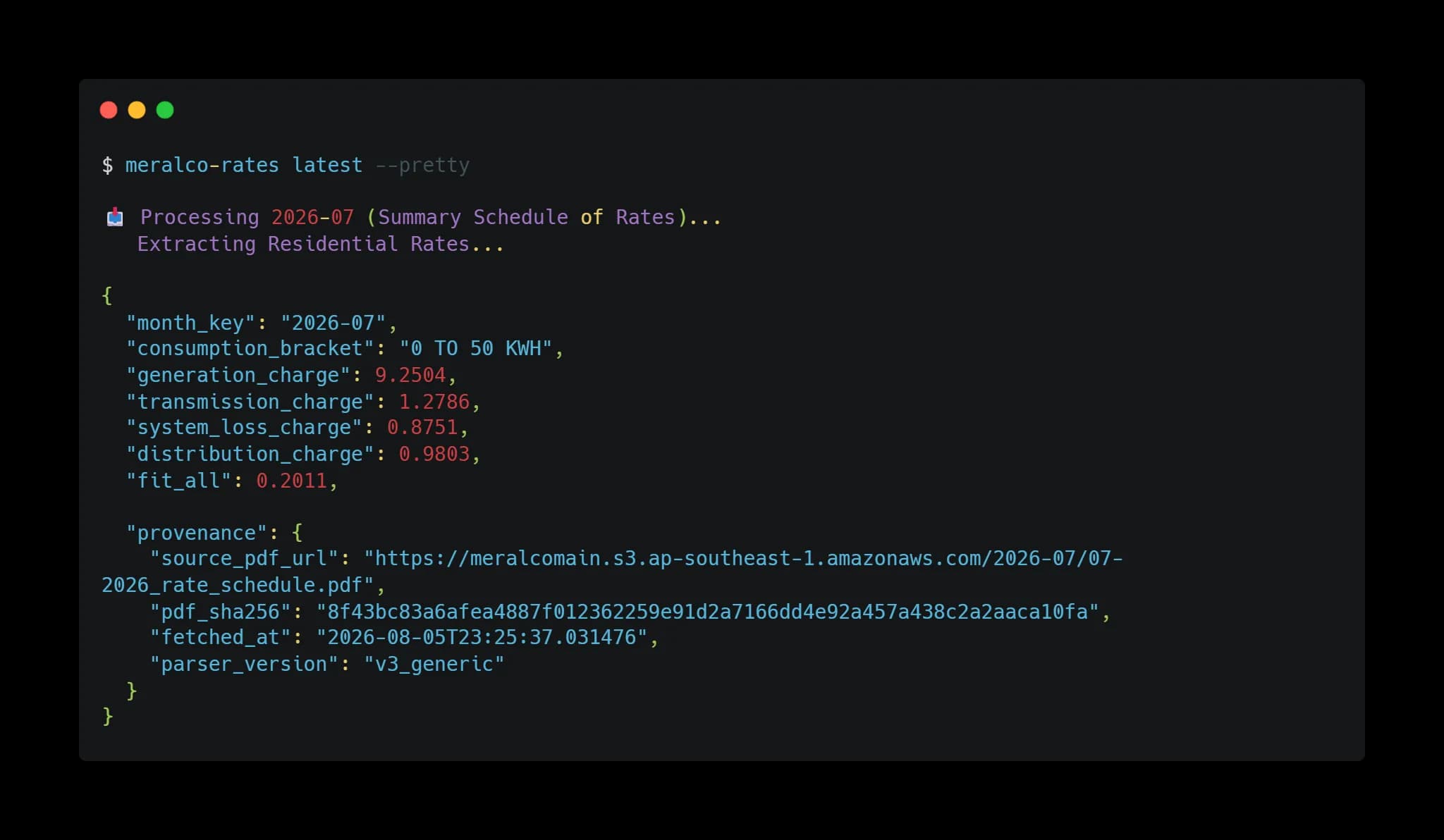
Odoo-to-MongoDB Geospatial Linking
Mapped physical serial numbers to Odoo CRM records, enriching telemetry with live geospatial and operational metadata.
Current-Based Weak-String Detection
Engineered algorithms to detect shading and underperforming PV strings by comparing current profiles, directly flagging hardware issues.
Mixed-String Efficiency Analysis
Analyzed operational efficiency across mixed-string configurations, exposing annualized waste calculations that drove physical re-wiring recommendations.
Dynamic Insights Engine
Developed a diagnostic engine generating automated, actionable insights based on behavioral telemetry, directly surfacing actionable maintenance alerts.
Technical Documentation Suite
Authored the project's core documentation, including architecture decision records, system flow diagrams, and a data dictionary, now standard onboarding material.
Unified Solis/Deye Normalizer
co-built with Geovanny PortodoDesigned a single ingestion schema normalizing vastly different JSON structures from Solis and Deye inverters into a unified timeseries format.
MongoDB Atlas Time-Series Migration
co-built with Geovanny PortodoMigrated legacy databases to a MongoDB Atlas time-series structure, enabling efficient aggregation and querying of high-frequency telemetry data.
Docker/Cloud Run Config
co-built with Geovanny PortodoContainerized the entire ingestion pipeline and orchestrated automated deployments using Docker and Google Cloud Run for resilient execution.
System Architecture
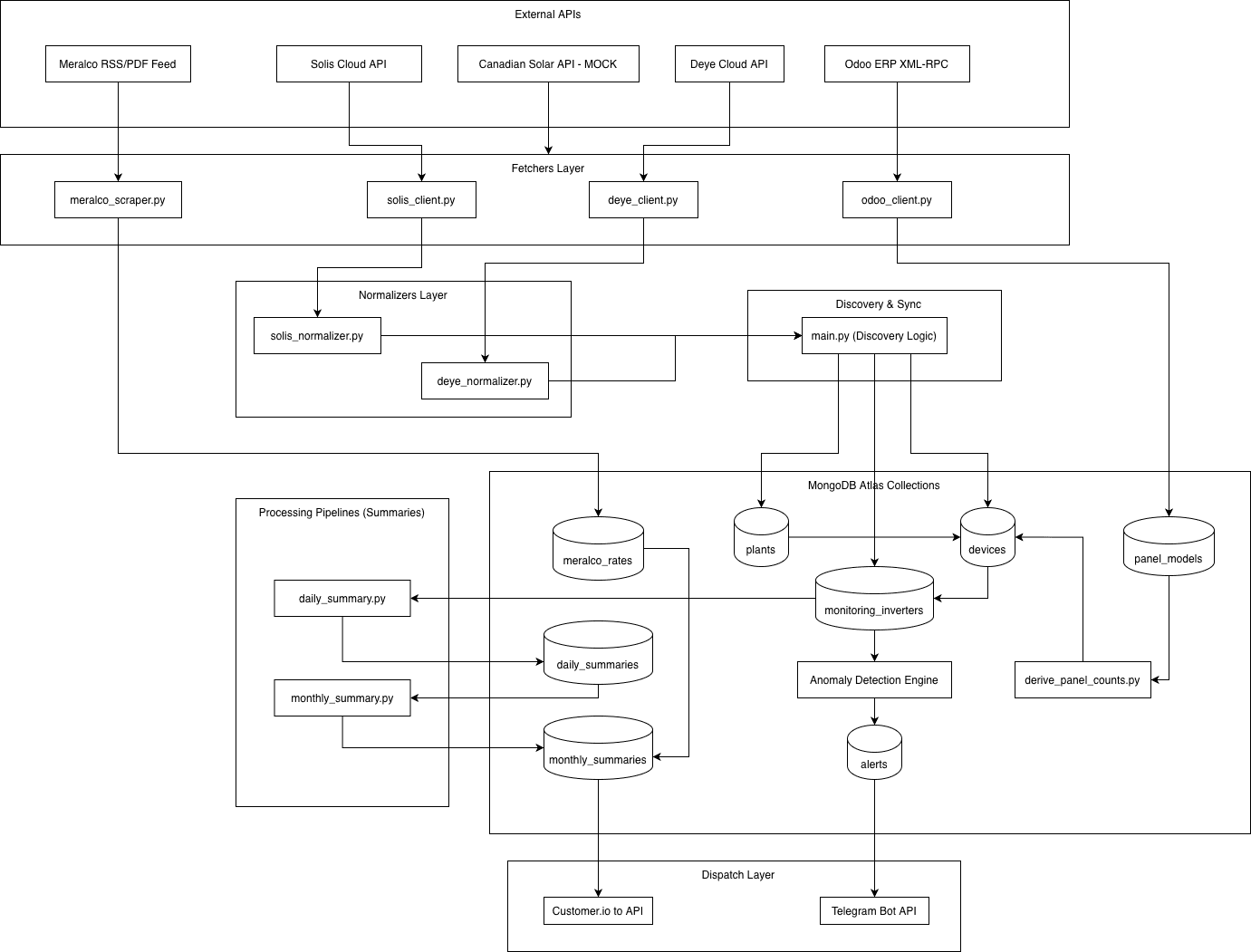
The full system data pipeline: raw telemetry is ingested from disparate inverters (Solis/Deye), passed through separate per-vendor normalizer scripts to standardize the timeseries schema, and loaded into MongoDB Atlas for downstream anomaly detection, summary aggregation, and alert dispatch.
Technologies
PythonMongoDB AtlasDockerGoogle Cloud RunOdoo CRM (XML-RPC)pdfplumberOpenStreetMap/NominatimGoogle Cloud Secret Manager
Engineering Decisions
01
Voltage/Current Mismatch Correction
Resolved a critical metric-type mismatch in the dynamic panel estimation engine, correcting how voltage and current were handled to ensure accurate performance calculations.
02
3-Tier Data Coverage Architecture
Rather than failing or providing inaccurate insights when telemetry drops, built a 3-tier coverage system (minimal, limited, full) that safely bounds which insights are generated based on available data volume.
03
Canonical Identity Resolution
Eradicated messy legacy plant IDs and vendor-specific device IDs from the ingestion pipeline, standardizing resolution to strictly map physical inverter serial numbers directly to the canonical Odoo CRM records.
Project Summary View Full E-Portfolio